Heytea Reopens China Franchising, Screens Out Quick-Profit Seekers
Key facts
Mixue Group, the world's largest tea and ice cream chain by store count, reported first half 2026 revenue up 2.3 percent to 15.2 billion yuan, about 2.26 billion dollars, while net profit fell 14.7 percent to 2.32 billion yuan, about 345.2 million dollars. Store openings slowed to 5,455 for the half and closures rose to 1,289, and the company shut 89 overseas stores across Vietnam and Indonesia as rising distribution costs squeezed franchisee margins. China's bubble tea industry as a whole has slowed with it, according to trade press coverage: store counts nationwide have fallen from roughly 445,100 in 2023 to about 372,700 by mid-2026, as growth that once ran in the double digits settles into mid to high single digits.
Smaller rivals are responding by pushing past the core drink. Guming, the second largest chain by store count, posted revenue up 31.9 percent to 7.47 billion yuan and adjusted profit up 44.4 percent for the half, then on September 5 began testing a new after-hours beverage category inside a single store in Hangzhou's Hubin district, converting part of an existing shop rather than opening a standalone venue. Chagee has been testing ice cream across 190 outlets, reporting a 20 percent lift in offline sales at those locations, and on September 7 started selling a 5-yuan tea egg as a breakfast item at seven Shanghai stores, dine-in only, aimed at the quiet pre-10:30 am slot. Heytea, which reopened its franchise program on September 7 after an 18-month pause with tighter screening for applicants, is a smaller data point in the same story: an industry adjusting its growth model on several fronts at once.
What it means for the Gulf market
Nothing here changes what is on sale in Riyadh or Dubai this week. None of these chains operate in the Gulf, and Guming's after-hours category test in particular could not travel here even if a brand wanted it to. What is worth watching is the pattern underneath the headlines. China's bubble tea sector spent roughly 2017 to 2022 in the store-opening phase the Gulf market is still working through today, then hit a ceiling where adding outlets stopped translating into added profit and pushed the largest chains to defend margins and the next largest to search for a second category rather than a second wave of stores.
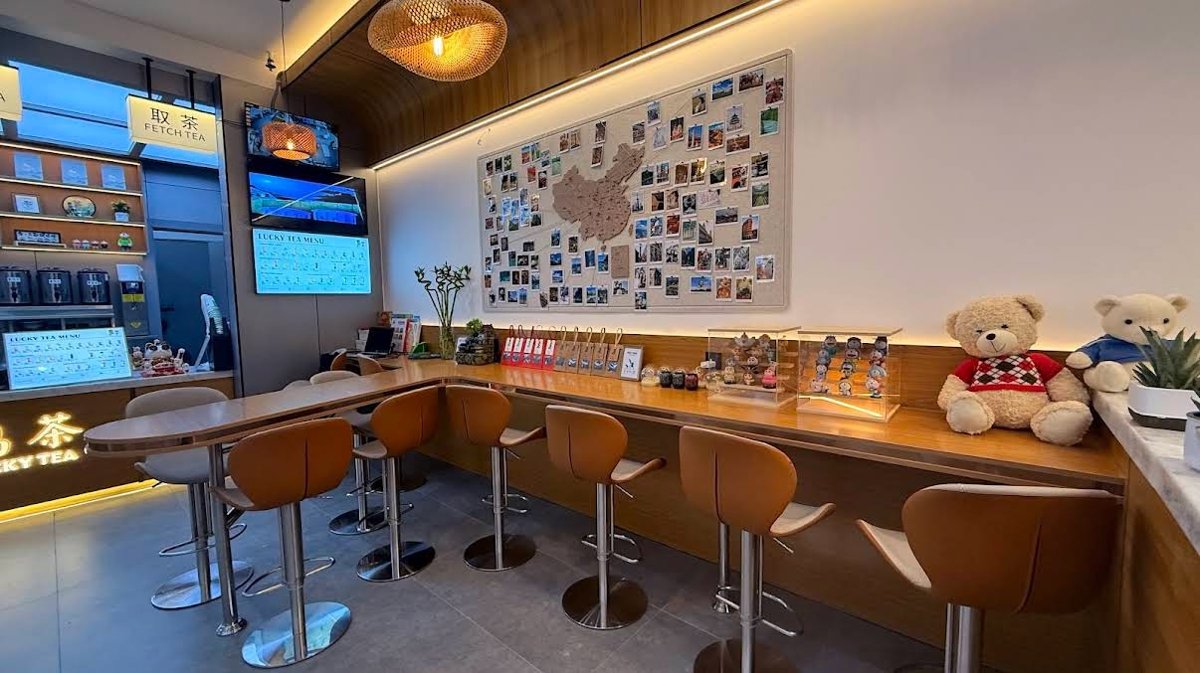
For any brand building a tea concept in Saudi Arabia today, including Saudi-founded chains such as Lucky Tea that trace their tea culture back to China, the useful takeaway is timing rather than imitation. A market still adding its first hundreds of stores has room to grow through store count alone for now, but the origin market's experience suggests that daypart gaps, single-category dependence, and per-store economics are worth planning around well before growth actually slows, not after.
Background
China's modern tea sector grew at an average compound rate near 24.9 percent a year between 2017 and 2022, a period when opening stores faster than competitors was close to the entire strategy. That growth rate has since come down to mid to high single digits, and first-tier cities in particular are now saturated enough that brands compete on profit per store rather than on total outlet count. Investors have adjusted accordingly: rather than funding new entrants or IPOs, capital has begun consolidating around established brands, illustrated by Bain Capital's acquisition of the Gong Cha chain from TA Associates in early August 2026.
Against that backdrop, the moves from Guming and Chagee read less as unrelated stunts and more as a shared response to the same constraint. Coffee already proved that Chinese consumers would use a tea and coffee shop outside the afternoon peak if the shop gave them a reason to. The new nighttime drink category and the breakfast food push are both attempts to claim a daypart or a category that a chain's existing store footprint and delivery network can serve at close to zero extra real estate cost, at a point in the category's life when opening another store no longer reliably pays for itself.
Takeaway
China's bubble tea market is not shrinking, but it has stopped rewarding growth for its own sake, and Mixue's profit decline alongside Guming and Chagee's category experiments are two sides of that same shift. For markets like the Gulf, where tea chains are still earlier in the curve, the signal is not that a specific new drink category or breakfast eggs are coming next. It is that the transition from growing by opening stores to growing by defending margin and daypart tends to arrive faster than a brand expects, and the chains handling it best are the ones that started planning for it before the ceiling appeared.
Sources
- Caixin Global · Chart of the Day: China's Tea Chains Serve Up a Mixed Brew · August 31, 2026
- RetailNews Asia · Mixue Closes 89 Overseas Stores as First-Half Profit Drops 15 Percent · September 4, 2026
- Jiemian News (界面新闻) · Guming tests a new after-hours beverage category · September 9, 2026
- Jiemian News (界面新闻) · Chagee crosses over to sell tea eggs, 5 yuan each (霸王茶姬跨界开卖茶叶蛋,单点一个5元) · September 8, 2026
- South China Morning Post · As Bubble Tea Craze Cools in China, Can Full Equity Buyouts Revive Growth? · August 25, 2026